
Bank of Canada Holds Rate Steady at 2.25% For the Sixth Straight Decision

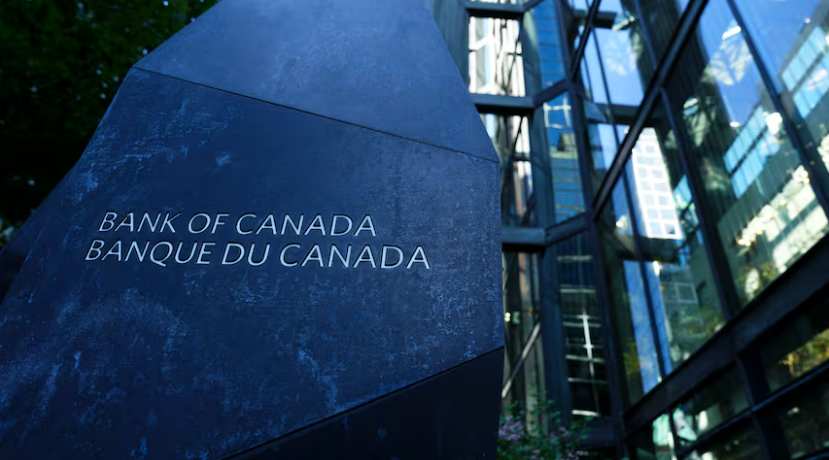
The Bank of Canada has once again left its benchmark interest rate unchanged at 2.25%, marking the sixth consecutive rate hold.
While the decision was widely expected, the Bank's latest announcement struck a noticeably more optimistic tone than in previous months. Economic growth appears to be picking up after a weak start to the year, and policymakers believe the economy is beginning to work through recent challenges.
That said, inflation remains above target, and ongoing geopolitical tensions continue to create uncertainty. As a result, the Bank is maintaining a cautious approach while remaining prepared to act if conditions change.
Canada's Economy Is Beginning To Recover
After several quarters of sluggish growth, the Bank of Canada believes Canada's economy is regaining momentum.
Following a modest contraction earlier this year, economic activity is expected to rebound, with GDP projected to grow by approximately 2.5% in the second quarter of 2026. Consumer spending has strengthened, government spending has recovered, and exports are expected to support business investment in the months ahead.
The labour market has also shown encouraging signs. Canada's unemployment rate declined to 6.5% in June, while employment continues to improve despite ongoing month-to-month volatility.
Although challenges remain, the Bank now believes the broader sources of economic growth are beginning to expand, suggesting the recovery is becoming more sustainable.
Inflation Remains Elevated
While economic growth is improving, inflation continues to run above the Bank's 2% target.
Canada's annual inflation rate rose to 3.2% in May, driven primarily by higher gasoline prices resulting from elevated global oil prices.
The Bank expects inflation to remain elevated through June before gradually easing during the second half of the year. Current projections suggest inflation could fall to around 2.5% later in 2026 before returning to the 2% target in early 2027.
Importantly, measures of core inflation remain relatively well behaved, giving policymakers confidence that higher fuel costs have not yet spread broadly throughout the economy.
Global Events Continue To Shape The Outlook
Despite improving domestic conditions, international developments remain one of the largest sources of uncertainty.
The ongoing conflict in the Middle East continues to keep oil prices elevated, increasing transportation and energy costs around the world. At the same time, trade negotiations and tariff uncertainty with the United States continue to create challenges for Canadian businesses and exporters.
While these risks have not yet significantly disrupted Canada's recovery, they remain important factors that could influence future monetary policy decisions.
Why The Bank Is Holding Rates
The Bank of Canada believes the current policy rate remains appropriate as it balances two competing objectives.
On one hand, the economy is beginning to recover after a difficult period, making lower interest rates unnecessary at this stage.
On the other hand, inflation remains above target, and policymakers are determined to prevent temporary increases in energy prices from becoming persistent inflation across the broader economy.
Governor Tiff Macklem emphasized that while the Bank is willing to look through the direct impact of higher gasoline prices, it will not hesitate to respond if rising energy costs begin affecting a wider range of goods and services.
He also noted that future interest rate increases remain possible if oil prices stay elevated long enough to create more persistent inflationary pressures.
What This Means Going Forward
For Canadians, today's decision means borrowing costs remain unchanged.
Variable-rate mortgage holders will see no immediate impact on their payments, while fixed mortgage rates will continue to respond primarily to movements in bond yields rather than changes to the overnight rate.
The Bank's latest forecast suggests the economy is on a stronger footing than it was just a few months ago, but policymakers remain cautious.
Future rate decisions will depend largely on three key factors: the path of inflation, the strength of Canada's economic recovery, and developments surrounding global energy markets and international trade.
Bottom Line
The July rate announcement signals growing confidence that Canada's economy is recovering, but the Bank of Canada is not ready to declare victory just yet.
While economic growth has begun to improve and the labour market has strengthened, inflation remains above target and geopolitical risks continue to cloud the outlook.
For borrowers, homeowners, investors, and businesses, the message is clear: the Bank is comfortable keeping rates where they are for now, but it remains prepared to adjust monetary policy if inflation proves more persistent than expected.
Sources:
Bank of Canada – July 15, 2026 Rate Decision & Monetary Policy Report
CBC News – July 15, 2026 Coverage of the Bank of Canada Rate Decision


Comments